Letter from our Executive Director
When big shifts take place, things change beyond recognition, there is an understandable tendency to make predictions and create certainty by anticipating the future.
After the regime fell one year ago, we chose to approach the year slightly differently. Our role was to monitor what was happening in Syria and expose the realities; it was to listen to survivors and make sure their concerns were heard nationally and internationally in the upheaval of a new government; it was to bring together Syria’s heroes – the mothers, female activists, medics, investigators, and the diverse dispersed civil society – to share their vision for the new Syria. Our mission has always been to build a new Syria rooted in freedom and democracy and that continues.
It made 2025 a year in which hope and action collided with pain and uncertainty pretty much every day, spurring us on to have great impact at such a crucial time.
Within the unpredictability, we responded at speed to the clear need in front of us: killing and siege targeting communities because of their sect; families still searching for their loved ones, war crimes evidence going unprotected; Assad enjoying impunity in Moscow.
We found that our ambitions expanded to fit the space for change that emerged. We have seen how art can bring survivors together to help shape the new policies being designed by the interim authorities. We took victims’ demands to New York and met with UN delegates as they discussed a new resolution for Syria. We helped communities in Suweyda and in coastal areas to tell their stories, countering disinformation as it surged across social media.
At The Syria Campaign, we start 2026 with new clarity and urgency. Our vision of a free and democratic Syria has never been more resolute. We will be working with families of Syria’s missing children to ensure they get the justice and answers they deserve and help reunite families after so many years. We will be collaborating with young people to launch new research and a digital campaign based on their aspirations and demands. We will not let up on the push for answers for Syria’s disappeared and we will expose the disinformation that is trying to distort and disrupt a peaceful transition.
Now, there are countless new opportunities to influence how the transition happens and what it looks like but there are also increasing barriers to the full diversity of Syria’s society being included in the process. It has never been so important for creative communications and advocacy campaigns to support Syria’s survivors and democracy campaigners. The core pillars of transitional justice – truth, justice, reparation, and guarantees of non-recurrence – are the only way for Syria to transition toward peace, democracy, and rule of law.
Our work is directly guided by these pillars. Truth through amplifying documentation efforts, storytelling, countering disinformation, elevating survivor voices. Accountability in campaigning for an end to impunity through policy change and international action. Reparation by creating and supporting memorial and remembrance initiatives in collaboration with survivors and artists. And non-recurrence through exposing ongoing human rights abuses and holding authorities to account, supporting spaces for community gathering and connection.
What happens next matters, not just for the future of the country but for the global community and its shared sense of responsibility. International governments have the opportunity to show what true support looks like, led by Syrians from all backgrounds, and backed up by expertise from those who have done this before.
The past year has given me enough evidence to be confident in one forecast: Syria’s heroes, its survivors that have endured – and endure – so much, will be the power that rebuilds the country. The formidable force of civil society has the skills, experience and determination to hold the new government to account. The Syria Campaign, along with its growing movement of supporters, will be there at the forefront.
Yours sincerely,
Razan Rashidi, Executive Director
- Searching for Syria’s disappeared
2025 was an incredibly painful year for so many families who continue to search for their loved ones after Assad’s network of prisons was opened with the fates of at least 112,000 Syrians still unknown.
In January, as families searched the prison system for any trace of information, not only was disinformation and misinformation rife but the international community and national authorities failed to protect vital evidence.
We moved fast to launch a new campaign urging international institutions and Syria’s interim authorities to urgently support a Syrian-led effort, involving families and survivors, to preserve evidence, investigate crimes and hold all perpetrators to account. We pressured bodies such as the ICRC and the UN, urging meaningful action. A petition built a strong body of support while new films of the families’ search underlined the urgency on social media. A short film on Mayasa’s search for her husband was viewed more than 50,000 times and Latifa Muhammad Sha’ban described her search to Al Jazeera. A podcast episode with human rights activist Hiba Breis tells the story of being reunited with her father who had endured detention.
An open letter to the Syrian authorities called for the tampering with prisons and mass graves to stop while meetings with international policymakers in Damascus and in capitals around the world all built the pressure on institutions and the authorities to act.
The most powerful moments came when families shared their stories and expressed their demands, some for the very first time, at many gatherings and events throughout the year.
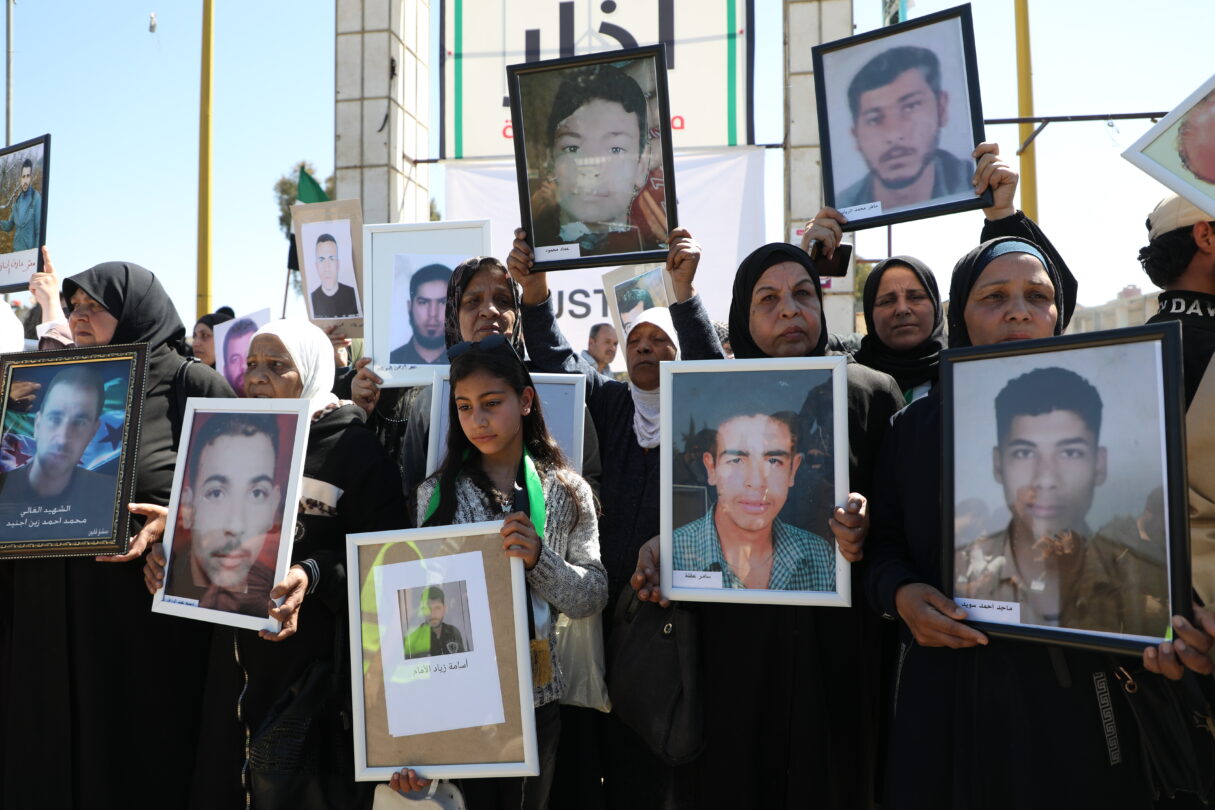
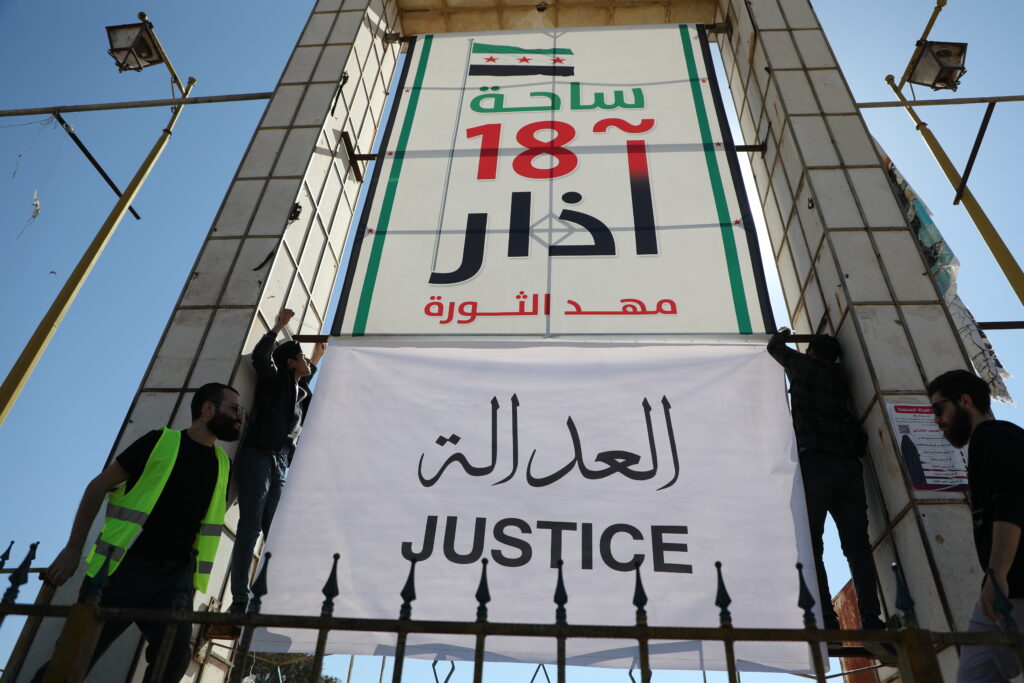
On the anniversary of the revolution in March, close to 300 people stood together in the famous “March 18 Square” to remember their loved ones and remind the world that justice is yet to be done. The event, covered by Al Jazeera, DW, Megaphone and other media reinforced the power of survivors from different backgrounds and experiences, many of whom have not been able to raise their voice safely before.
In June, Rania Najdi displayed her striking artwork at the national museum in Damascus and The Syria Campaign joined her to help bring families together for the exhibition and create a deeply moving space for connection. Even when the city’s electricity outage interrupted the event, families shared their experiences in darkness.
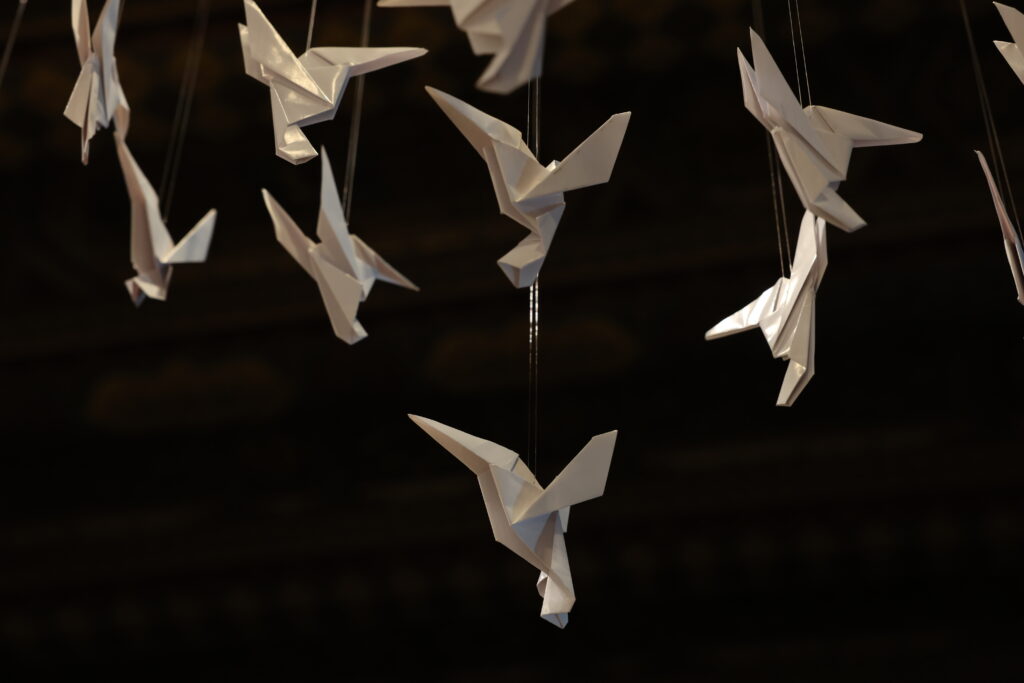
Under a canopy of origami birds families of the disappeared met and shared their pain, hope and demands. Representatives of the Interim Government, the National Commission for Missing Persons, and the Independent Institution for Missing Persons in Syria listened to the families’ demands and the urgent need for collective and serious action.
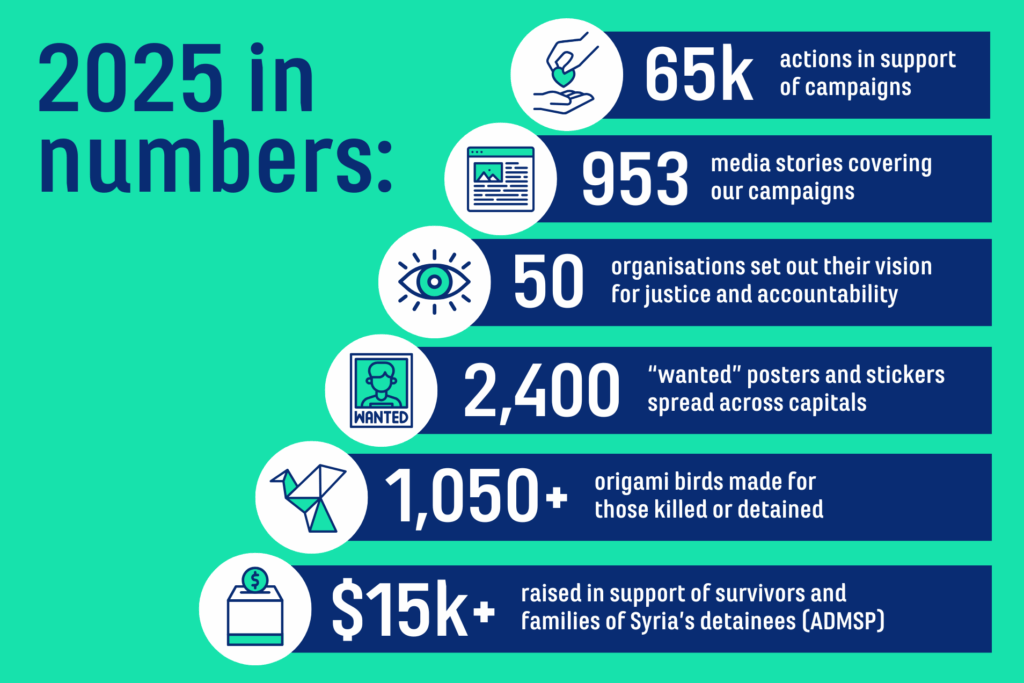
Two months later for the International Day of the Disappeared, hundreds of families and people from around the world joined Rania and made their own origami birds in a powerful act of solidarity and call to action.
In collaboration with new emerging organisations, most notably Fig gardens and Truth Tents, we worked with families of Syria’s disappeared to plant trees in memory of those killed or missing and create spaces for community and shared healing. The events took place at a local level in diverse locations reaching families that might not have the means or ability to travel to Syria’s cities. We joined families to gather in Darayya, Yarmouk Camp, and Rukn al-Din. We helped families connect with government representatives to advocate directly and raised their cause to an international level through media coverage and social media stories.
Many families told us that this was the first time they had even shared their stories, even with their neighbours, and that the events were vital for making sure they and their loved ones are not forgotten. Families empowered each other, learned from one another, and united around shared demands.
On the international Day of the Disappeared, families gathered at Hijaz Square in Damascus to renew their demands for truth and justice, and to hold perpetrators accountable. Holding photos of their loved ones, they made origami birds to tell the whole world that the struggle for truth and justice is far from over, and that the interim authorities and international community must take action to answer their demands.
On the same day in the village of Heish, other families planted 120 olive and fig trees, each bearing the name of a loved one killed or disappeared.
In order to address a large funding gap for victim and family groups, The Syria Campaign’s supporters gave more than $15,000 to ADMSP and their work to help families and survivors in urgent need of psychological, medical, and legal support to continue their healing journey and struggle for justice. While we worked with philanthropic donors to provide emergency support to legal, documentation survivors and family groups working on the frontline of the search for truth and justice.
2. Campaigning for Syria’s stolen children
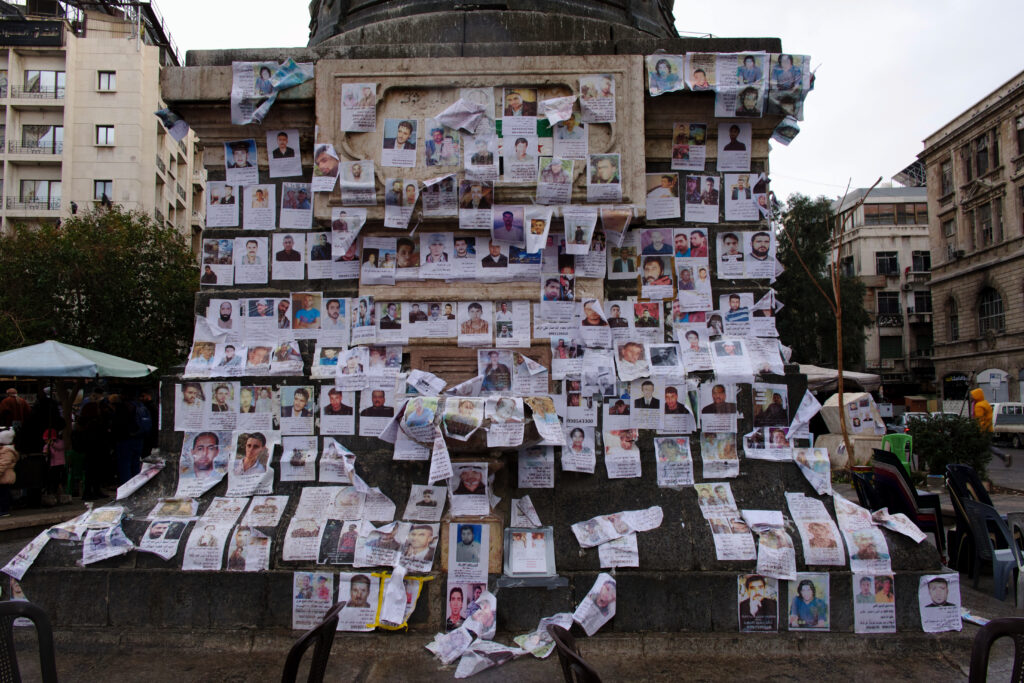
Following an important investigation by Lighthouse Reports, revealing how, under Assad’s regime, children of detainees were taken from their parents and hidden in Assad’s dungeons or orphanages, we supported families searching for their children to build strong recommendations and meet with government authorities, following a screening of the film in Damascus. The first-ever event on this under-reported human rights abuse brought together families to share their stories and demands with decision makers.
The moment was a vital first step in the urgent search for Syria’s stolen children, a campaign that will be a major priority for The Syria Campaign in 2026.
3. Speaking out against violence
When horrific killing and human rights abuses in Syria’s coastal areas at the beginning of March forced many families to flee their homes in fear for their lives, we responded rapidly with an urgent campaign to end the bloodshed. The sectarian nature of the attacks was fueled by online hate and incitement, threatening to destabilise peace efforts and justice and accountability processes.
We contacted policymakers to alert them of the crisis, sharing recommendations to act. We told the stories of survivors and first responders on social media and connected them to international media, helping to underline the responsibility of the international community and interim government to respond and the need for swift justice. In the month of March, we helped secure 591 pieces of media coverage including on the harmful real world consequences of disinformation.
Four months after the violence began, in advance of the release of the interim government’s investigation into the massacres, we asked supporters to share a message from Hanadi Zahlout, a Syrian activist and journalist whose three brothers were killed in the violence.
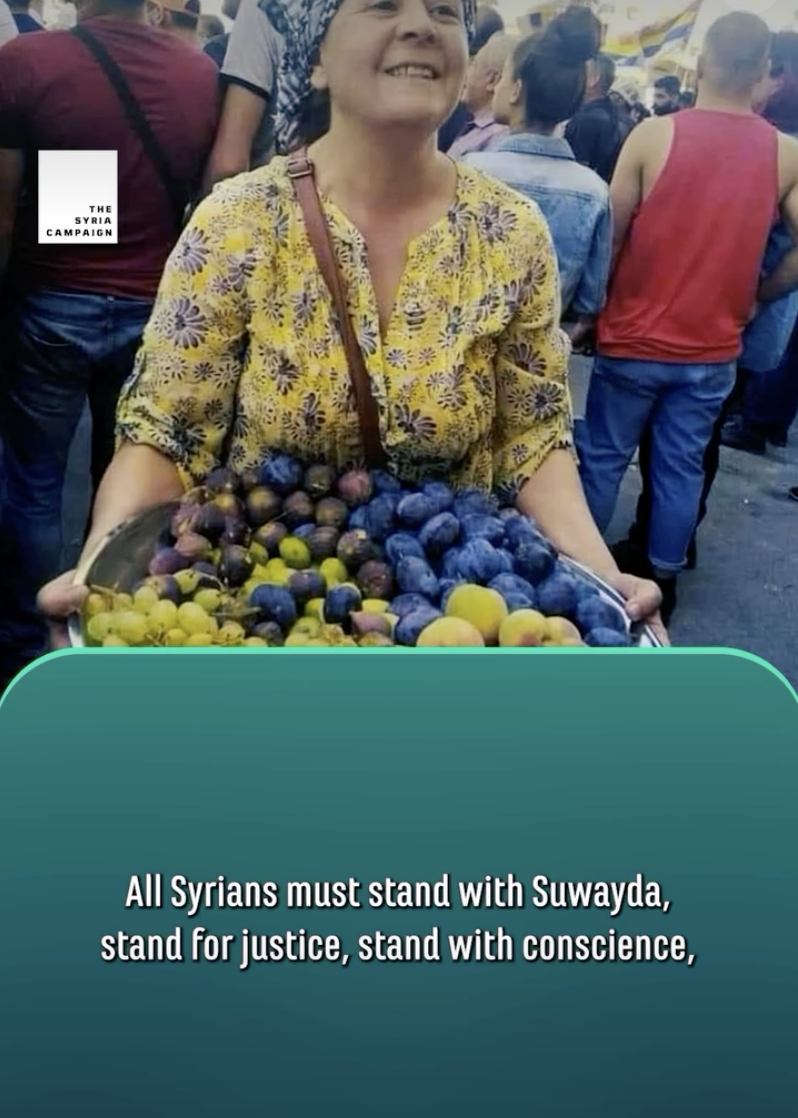
Again, in July when more than 1000 civilians, including humanitarian workers, were killed by armed groups and 93,000 people displaced in Suweyda, we shared testimonies from human rights defenders who detailed the violence and humanitarian consequences of the government-imposed siege and shared an emergency advocacy brief with international policymakers.
As the situation worsened, there were growing fears that Syria was on the brink of civil war. We launched a petition urging the interim government and the UN to act, a call that was signed by more than 28,400 people. We highlighted the inspirational story of a choir singing for peace and helped secure high profile media attention for the situation, including Sky news, the BBC, The Observer, DW, and The Sunday Times.
At the end of the year at the time of writing, the situation remains fragile. Communities continue to live in fear and much more needs to be done to stop spiralling violence, deliver justice and protect the hard-won opportunity to rebuild the country after so many decades of war. It is vital, not just for the protection of civilians but also for transitional justice, ensuring crimes of the past are not repeated.
4. The Silencing effect and the effect of silence
The Silencing Effect project took evidence from those with lived experience of online harms, including European social media users, directly to the EU commission to inform its implementation of the Digital Services Act.
Through thoughtful research, a visual human and data-driven report, a public campaign, policy events and EU advocacy, the project demonstrates the power of credible data backed up by personal testimony.
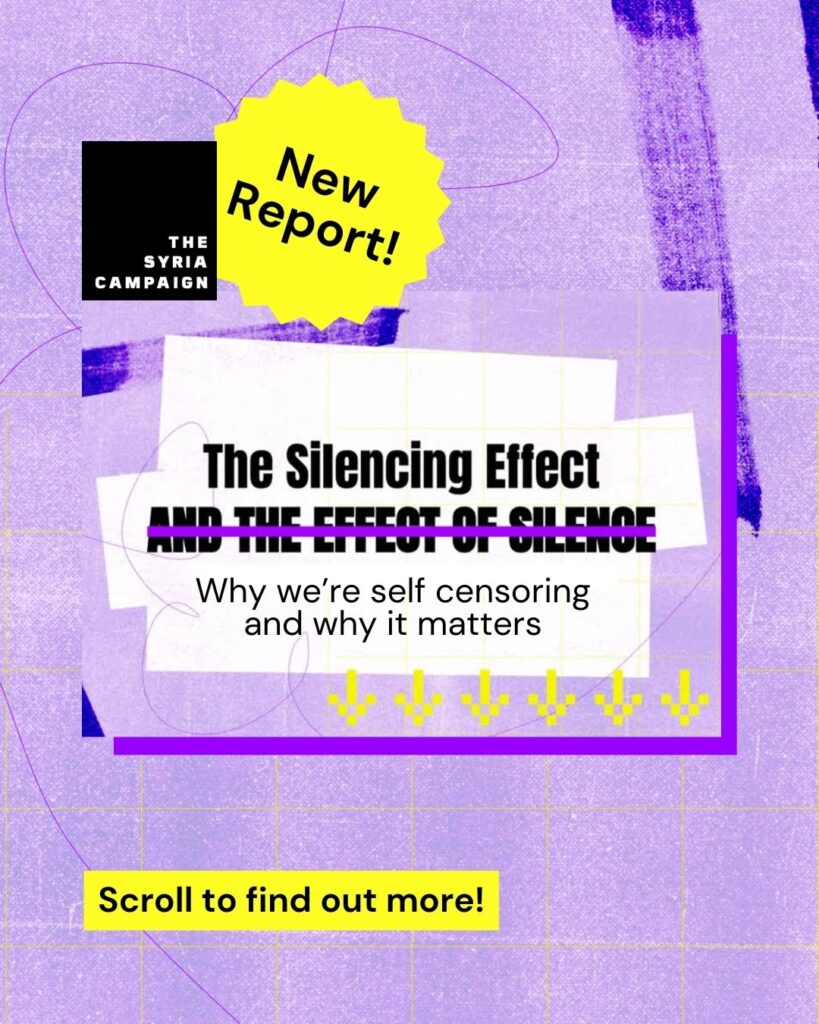
The Syria Campaign, together with Data4Change and pollsters RIWI, surveyed more than 4,000 social media users across the UK, France and Germany and talked to human rights defenders from Palestine, Ukraine and Syria to discover why we’re self-censoring online and why it matters.
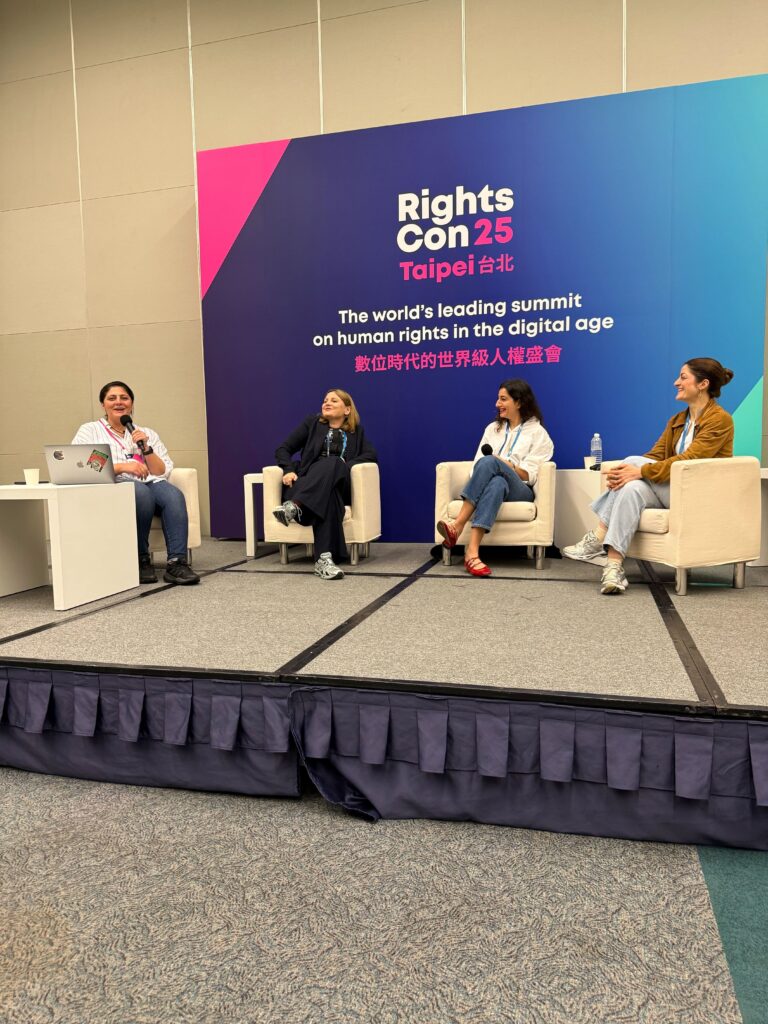
The Arabic version of the Silencing Effect launched in April on social media at a time when disinformation and hate speech in Syria was surging following sectarian violence in the coastal areas of the country. More than 1500 people took action by writing to the EU Commission urging it to do more to make our online world a safer place, while our Rightscon event examined the report and discussed solutions with the digital rights community and representatives from big tech.
5. Bring Assad to Justice
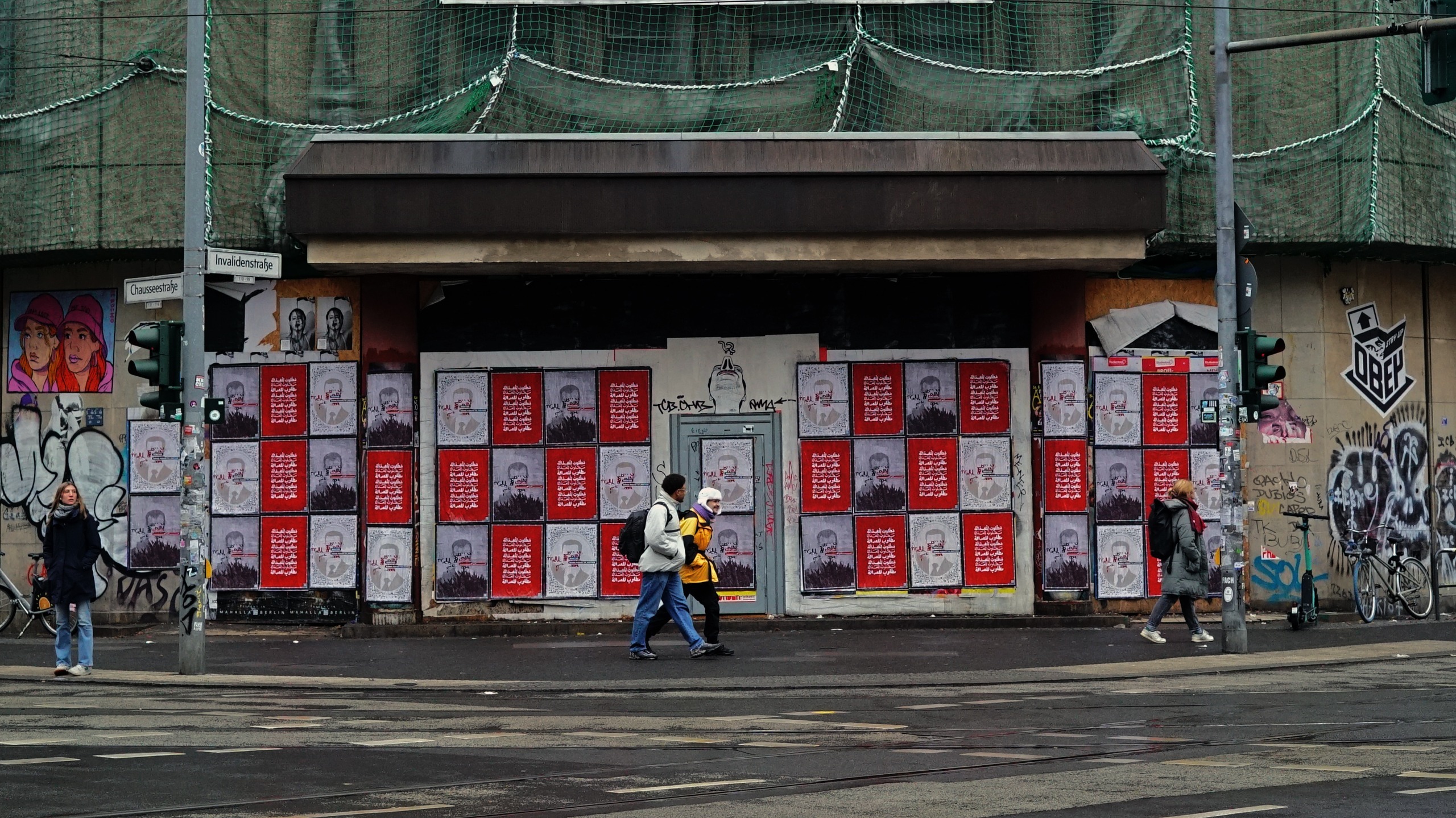
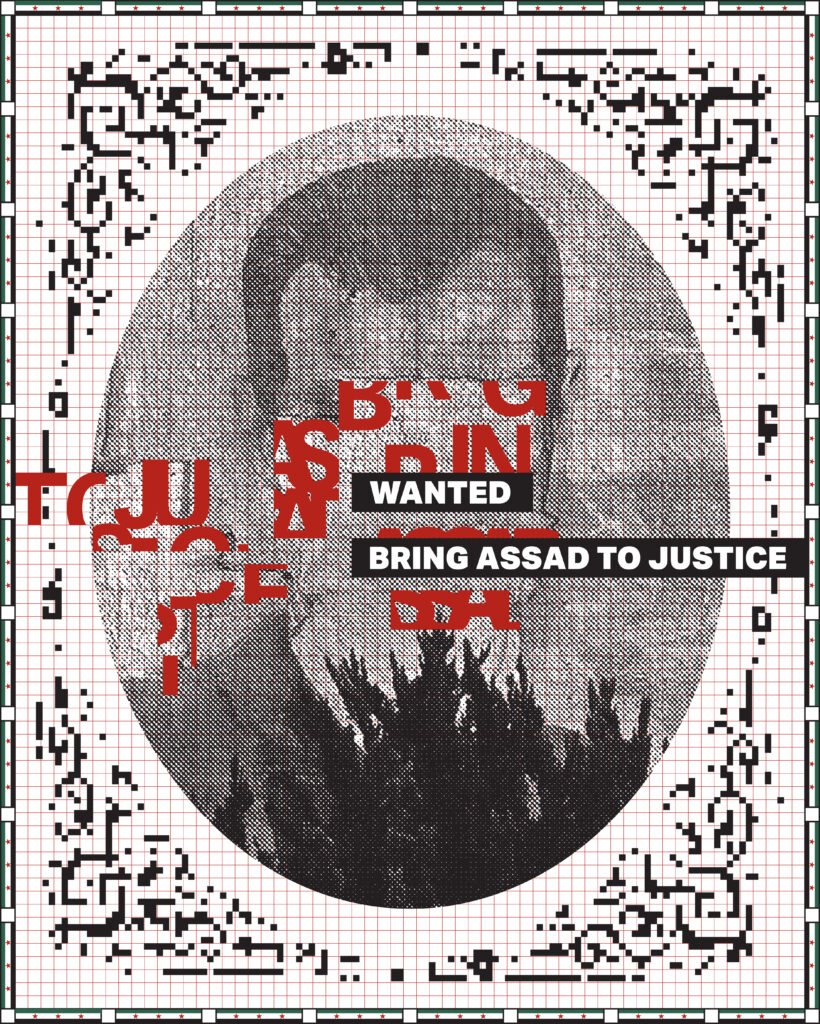
Ahead of 8 December, one year on from the fall of the Assad regime, we worked with award-winning Syrian multidisciplinary artists Ranim AlHalaky and Kinda Ghannoum to create wanted posters demanding: Bring Assad to Justice.
The stunning artworks are based on an image of Assad torn from a wall in Homs and reimagined as a pixelated “wanted” poster. Thousands of posters and stickers were displayed on walls, cafes and homes in Syrian cities, Homs, Aleppo and Damascus, as well as London, Amsterdam and Berlin. It even ran on the back page of a major Syrian daily newspaper and was displayed at a photographic exhibition in Syria’s capital.
The campaign calls on international governments to be part of creating a Syrian-led hybrid special court, supported by the international community as a practical and legitimate way to prosecute Assad and senior perpetrators. A petition calling for the initiative has so far garnered almost 19,000 signatures and people from around the world shared the poster on their social media feeds.
An advocacy brief outlining the case for the tribunal was shared with policymakers and institutions. And the campaign was covered by media outlets, including the BBC, Al Jazeera, New Arab and Italian magazine Iconografie.
Survivors of war crimes and families of the disappeared explained why justice for Assad’s crimes is so urgent in a video on Instagram as they displayed the demand in their cities. The power of the campaign was clear as families and individuals across Homs and Aleppo replaced the torn regime images of Assad with beautiful artworks demanding justice for his crimes.
6. The power of civil society
From Syria’s first national Justice Conference in Damascus in January, which The Syria Campaign organised with more than 50 civil society organisations, it was clear that civil society would be stepping up at every opportunity to advocate and formulate the vision for transitional justice and political transition for the country.
Families and survivors came together for two days of Syrian-led discussion to shape a shared vision for transitional justice. The conference produced a joint policy paper that set out concrete recommendations, which have helped inform new national bodies, including the Committee on the Missing and the Transitional Justice Committee, and has been shared widely with international policymakers.
In March, The Syria Campaign’s Raya Homsi, along with Action for Sama’s Waad and Hamza Al-Kateab, took these messages to New York and Washington where they met with 84 policymakers to push for sustained support for justice, advocacy, and rebuilding efforts in Syria.
We were there to represent the struggles and demands of every Syrian, those facing the humanitarian consequences of decades of war and to demonstrate the urgency of reengaging with the world after the lifting of economic sanctions. We took our messages and the experiences of those living in deep poverty to policymakers. People like Sawsan and her family who told us her story from the destroyed building that used to be her home. The garden she had created in a landscape of rubble reveals the plight of so many working hard to create change.
When world leaders gathered in New York for the 80th session of the UN General Assembly and the first time in decades, a Syrian leader made an address, The Syria Campaign was there with other human rights defenders to ensure the voices of Syria’s victims and survivors are also heard. As we met with policymakers, we asked them to support justice for every war crime committed in Syria – for violence of the past year to the atrocities of the past 15 years, every perpetrator no matter their sect or allegiance to be held accountable under the rules set out by international law.
Survivors of war crimes and supporters from around the world sent messages to UN Secretary General António Guterres to demand real justice for war crimes in Syria and Raya Homsi echoed their messages from outside the UN, following a week of strong briefings with UN missions and policymakers.
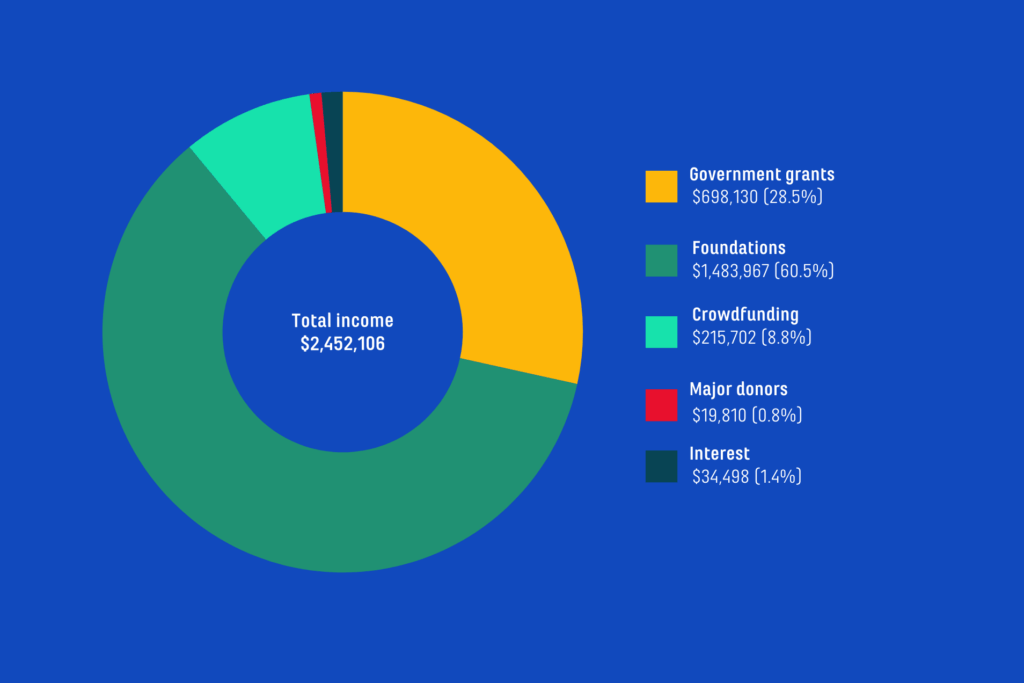
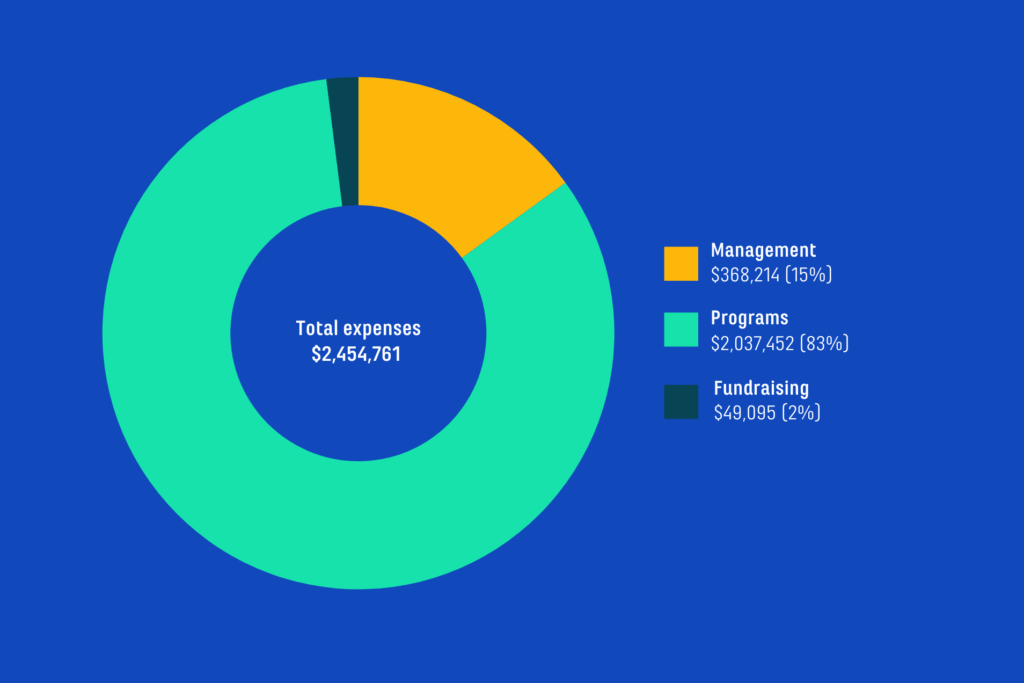
2025 income and expenses
Thank you
Thank you to Rockefeller Brothers Fund, Oak Foundation, Open Society Foundation (OSF), Bureau of Democracy, Human Rights, and Labor (DRL), Dutch Ministry of Foreign Affairs, National Endowment for Democracy (NED), Global Fund for Women (GFW), Women’s International League for Peace and Freedom (WILPF), European Media and Information Fund (EMIF), International Media Service (IMS), Luminate Strategic Initiatives, Asfari Foundation, and the Deutsche Gesellschaft für Internationale Zusammenarbeit (GIZ) GmbH GIZ and their commissioning parties, the German Federal Foreign Office, the European Union, and the Danish Ministry of Foreign Affairs. Their partnership, support and trust have been vital in sustaining our work at this pivotal moment for Syria.